Blox Tower: Slap Master
- 4.1
- Rating
- 1.00M
- Installs
- Free
- Price

 Analysis by App-foxy
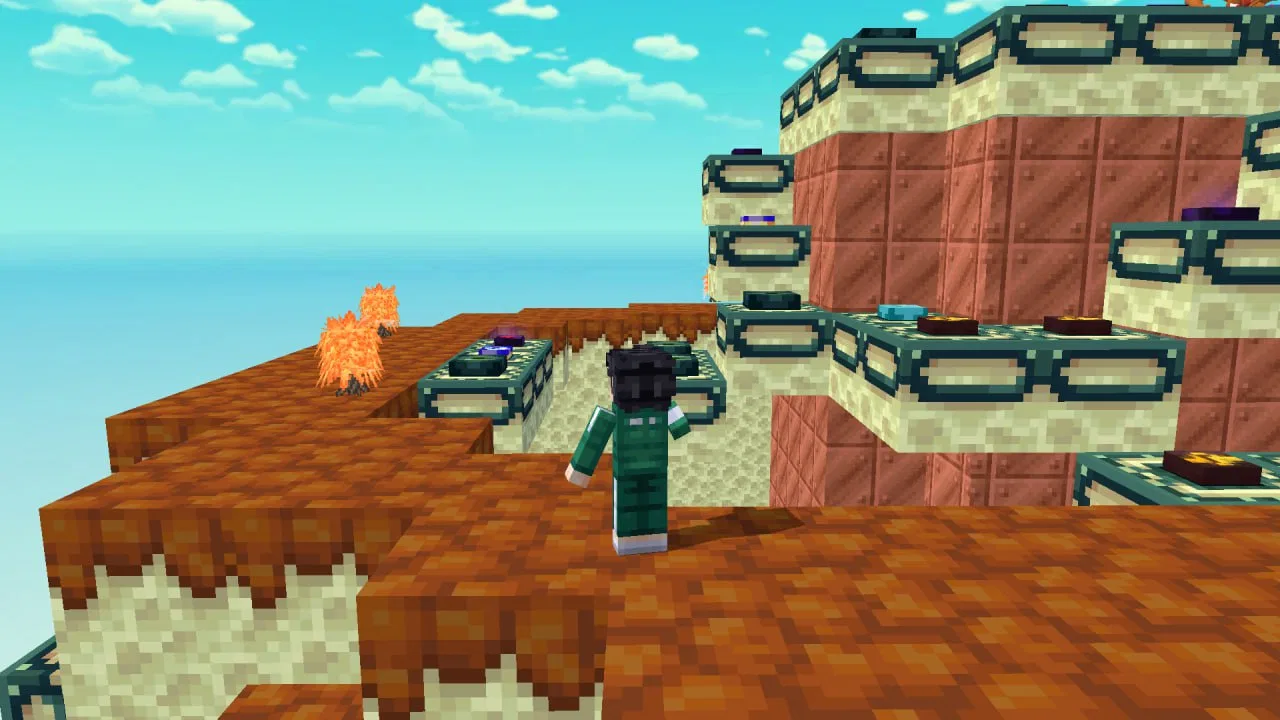
I approached Blox Tower: Slap Master as a quick adventure game rather than expecting a large, story-heavy production. Its central idea is presented in a very simple way: you enter a block-themed tower and work through the experience built around the “slap master” concept. That immediately makes it easy to understand, but it also sets a clear expectation. This is best suited to someone who wants a light game to try in short sessions, not someone looking for a deep role-playing system or a long cinematic campaign.
The game comes from Blox Global and is free to play. It is listed for everyone, which makes the presentation approachable for younger players as well as adults who enjoy uncomplicated arcade-style adventures. The current version is 1.3, and the game runs on Android devices using version 6.0 or later. Those details matter if you are installing it on an older phone, because compatibility is more useful to know before downloading than after spending time looking for a game that will not open.
Its audience is already fairly broad: the game has passed over a million installs and holds a 4.1 average from around one and a half thousand ratings. I would not treat those figures as proof that every player will enjoy it, but they do suggest that the basic idea is accessible enough to attract a substantial casual audience. My own recommendation is to begin with modest expectations, learn the interaction quickly, and then decide whether the tower’s rhythm suits you.
You May Also Like

 Blood Strike: 2.5 Anniversary
Blood Strike’s Loadouts Turn Every Drop Into a Tactical Gamble
A close look at Blood Strike’s custom loadouts: how fast access to signature weapons reshapes its battle royale rhythm, rewards preparation, and narrows the gap between fights.

 Pandora - Music & Podcasts
Pandora’s Music Is Easy to Start, but Harder to Recover
Pandora’s strength is its low-effort path from a seed to a station. Its weak spot is how much confidence it asks you to place in connection, setup, and quiet recovery.

 8 Ball Pool
 Is Built on Rivalries, Rematches, and Routine
A close look at the rivalries, rematches, shared routines, and unanswered safety questions that turn a quick pool match into a persistent mobile community.

 Samsung Music
’s Quiet Strength Is Playing What You Already Own
Its reach comes less from spectacle than from dependable access to a personal library. That simplicity is both the app’s strongest retention engine and its ceiling.

 AccuWeather: Weather Radar
AccuWeather Review: A Quick, Clear Forecast for Everyday Decisions
For everyday plans, the best forecast is the one you can understand quickly. AccuWeather makes rain timing, radar, and local conditions easy to act on, with a few trade-offs.

 Hill Climb Racing
Why Hill Climb Racing Still Turns Crashes Into One More Run
A tiny car, a bumpy hill and one more upgrade: Hill Climb Racing keeps resurfacing because its simple chaos makes every near-miss feel personal.
More From Our News Desk
View All News


What the first session feels like
The first thing I noticed about this kind of game is how important the opening moments are. A simple title can be a strength when the controls and objective become clear immediately. It can also become a weakness if the game leaves you guessing about what counts as progress. With Blox Tower: Slap Master, a new player should focus less on searching for hidden complexity and more on understanding the basic action the game wants repeated.
That makes it a reasonable choice for a short break. I can imagine opening it while waiting for an appointment, playing a few attempts, and closing it without needing to remember a complicated plot or a large set of controls. The block-based setting also gives the experience a playful identity instead of presenting itself as a realistic adventure. If you prefer colorful, exaggerated game worlds, that tone should feel more inviting than a serious survival game.
At the same time, the straightforward premise means your enjoyment will depend heavily on whether the core action remains satisfying. Players who need constant story development, exploration with many different systems, or detailed character progression may find the experience too narrow. I would choose a larger adventure game instead if my goal were to spend an entire evening following quests or uncovering a substantial narrative.
A useful way to approach the opening is to treat it as a learning loop. First identify what the game places directly in front of you. Then try the obvious interaction rather than tapping randomly across the screen. After that, watch for the response: a change in position, a completed action, a new obstacle, or another sign that the game has accepted your input. This habit helps because simple mobile games often communicate progress through small visual changes instead of long explanations.
Getting started without overthinking the setup
Installation should be uncomplicated on a compatible Android phone, and the free price removes the need to make a purchase decision before trying the game. I would still recommend opening it when you have a quiet minute rather than launching it in the middle of something urgent. The first session is where you learn the game’s timing and discover whether the controls feel comfortable on your particular screen.
Before beginning, I would check that the device is running Android 6.0 or newer. That is the minimum operating system listed for the game, so older devices are not the right place to start. On a newer phone, the more relevant question is not whether the game has an impressive specification sheet, but whether the touch response feels reliable and whether the display gives you enough room to see the tower and the next interaction clearly.
I also suggest keeping the first attempt deliberately simple. Do not try to rush through every prompt or assume that the fastest tap is always the correct one. Look at the whole screen before acting. In a game built around a direct physical action, the difference between tapping the target and tapping beside it can decide whether the attempt feels smooth or frustrating.
For a child, the everyone rating makes the game easier to consider than an adventure centered on frightening imagery or mature themes. I would still play the opening alongside a younger player, not because the rating creates a problem, but because shared guidance can prevent confusion when the meaning of an icon or instruction is not obvious. That also gives you a quick sense of whether the pace is suitable for that player.
Finding the first meaningful success
The first real success should be the moment you complete the game’s intended action and recognize why it worked. I would not measure that success by how quickly it happens. Instead, pay attention to the relationship between your tap and the result. If the game reacts, ask what changed and what the next action appears to be. This turns the opening from random button pressing into a small process of observation and correction.
One practical technique is to use a steady rhythm. Tap once, pause long enough to read the response, and only then continue. Rapid repeated taps can make it difficult to tell whether the game registered the first action, especially when the screen is busy or the response is brief. A slower first attempt gives you information that can make later attempts more confident.
Another useful habit is to keep your finger away from the edges of the screen until you know where the game expects interaction. On a compact phone, accidental touches are more likely when you are trying to act quickly near a corner. Centering your attention on the visible target makes the first few actions easier to interpret and reduces the feeling that the game is ignoring you.
Once you complete an action successfully, repeat it with one small adjustment rather than changing everything at once. If you altered your timing, keep the same position and see whether timing was the real difference. If you changed position, return to your previous rhythm. This is a simple troubleshooting method, but it is especially helpful in a game whose premise is immediately understandable while the exact feel of its interaction takes a little practice.
For an everyday example, imagine using the game during a ten-minute coffee break. I would spend the first minute learning where to tap, the next few minutes repeating the basic action carefully, and the remaining time deciding whether the tower’s challenge is enjoyable enough to revisit. That is a better test than playing while distracted, because you can separate genuine difficulty from missed inputs caused by trying to multitask.
Where new players may become confused
The most likely confusion comes from assuming that a familiar word explains every rule. “Slap” tells you the style of interaction, but it does not automatically tell you the correct timing, target, or sequence. I would avoid treating the title as a complete tutorial. Read the screen, observe the result of each attempt, and allow the game to show you how its version of the action works.
It is also easy to mistake movement for progress. If something on the screen changes, that does not necessarily mean the whole challenge is complete. Look for a clear transition before deciding that you have finished a stage or reached the next part. This prevents a common mistake in casual games: repeating an earlier action when the game has already moved on, or stopping too soon because a small animation looked like a conclusion.
Another point worth remembering is that free does not mean every player will find the experience equally comfortable. The absence of an upfront price makes experimentation easy, but the real trade-off is your time. If the interaction feels repetitive after a few attempts, there is no reason to force yourself to continue simply because the download cost nothing. A free game earns its place on your phone by being enjoyable, not merely by being available.
I would also avoid comparing it directly with a large adventure title based only on the category label. Blox Tower: Slap Master is better understood as a compact, action-focused experience with an adventure flavor. A conventional adventure game may offer broader exploration, more dialogue, puzzles, or character development. This game’s advantage is that it can be understood more quickly. The trade-off is that its appeal may depend on a smaller set of repeated interactions.
If the controls seem unresponsive, first slow down and make one deliberate attempt. Check whether you are touching the intended area rather than the surrounding background. Give the game a moment to react before tapping again. These steps do not change the game itself, but they help distinguish a genuine control issue from hurried input. That distinction is important before deciding that the game is not working for you.
How to decide whether it fits your routine
I see the strongest use case in brief, low-commitment sessions. It suits someone who likes trying a clear idea, learning the interaction, and seeing whether repeated attempts become satisfying. It may also work for families looking for an accessible game with an everyone rating, provided that the child enjoys the pace and understands the objective.
I would be more cautious about recommending it to players who want a rich adventure with a large world. If your favorite games are built around collecting detailed equipment, making dialogue choices, solving layered puzzles, or following a long story, this is probably not the best replacement. A traditional exploration game will give you more variety, even if it takes longer to learn and demands more storage, attention, or patience.
The game’s rating gives it a useful starting point, but ratings cannot predict whether you personally enjoy the central mechanic. Some players like the satisfaction of improving a small physical action. Others quickly need a new type of challenge. I would use the free download to test that specific preference rather than deciding from the adventure label alone.
For older phones that meet the minimum system requirement, I would keep expectations realistic. Compatibility means the device can support the listed operating system level; it does not guarantee that every older handset will feel equally smooth or comfortable. Screen size, touch sensitivity, and general device condition can affect how enjoyable a timing-based interaction feels. If your phone has a small or unreliable display, a larger device may make the game easier to read and control.
What to do after the opening clicks
Once the first successful action feels repeatable, the next step is to stop treating each attempt as an isolated tap. Build a small routine: scan the screen, identify the intended target, act once, and inspect the response. That sequence keeps you from wasting attempts through impatience and gives you a clearer sense of how the tower is asking you to proceed.
You can also use short practice sessions instead of trying to master everything in one sitting. Play until your attention starts to drift, then close the game and return later. This is not only easier on your patience; it can reveal whether the game has lasting appeal. A good short-session title should remain pleasant when you come back, not feel like an obligation after the novelty fades.
If you are introducing it to another person, let them make the first few attempts without taking the phone away. Explain the goal in plain language, but allow them to discover the timing. That approach works particularly well here because the core idea is simple enough to demonstrate while still leaving room for the player to develop their own rhythm.
My advice is to judge the game on three questions after your first proper session. Did you understand what the game wanted you to do? Did your actions feel more controlled after a few attempts? Did you want to try again without being pushed by a reward or a notification? If the answer is yes to most of these, the game has probably found its audience in you.
My overall impression is favorable but specific. Blox Global has made a game that is easy to approach, free to try, and suitable for players who enjoy a focused block-themed adventure built around a direct action. Its 4.1 average and audience of more than a million installs show that the concept has reached many players, while the everyone rating makes it a relatively approachable choice for casual households.
I would recommend it to a friend who wants something uncomplicated for short breaks and enjoys improving through repetition. I would not recommend it as a substitute for a full-scale adventure game, especially if variety and story are the main reasons you play. The smartest way to try it is to begin slowly, complete the first action deliberately, and then decide whether the core loop remains enjoyable after the initial novelty.
The best reason to install it is not the size of its audience, but the chance to test a simple action quickly and on your own terms. Since it is free and supports Android 6.0 or later, the barrier to trying it is low. Give it a focused first session, pay attention to how the controls respond, and keep it only if the tower’s rhythm makes you want to return.
FAQs for Blox Tower: Slap Master
01What is Blox Tower: Slap Master all about?
Blox Tower: Slap Master is an engaging mobile game where players build and manage their own towers by stacking blocks. The unique twist is the slap mechanic, which allows players to interact with the blocks dynamically. The game combines elements of strategy and action, challenging players to balance construction with defense.
02Is Blox Tower: Slap Master free to play?
Yes, Blox Tower: Slap Master is free to download and play on both Android and iOS devices. However, the game does offer in-app purchases for players looking to enhance their gameplay experience. These purchases can include items like power-ups, special blocks, or cosmetic upgrades.
03What are the main features of Blox Tower: Slap Master?
Blox Tower: Slap Master boasts several exciting features, including vibrant graphics, intuitive controls, and a variety of levels that increase in difficulty. Players can enjoy a competitive leaderboard, challenging missions, and the ability to customize their towers. The slap mechanic adds a unique layer to traditional block-stacking games.
04Does Blox Tower: Slap Master require an internet connection?
While Blox Tower: Slap Master can be played offline, certain features such as leaderboards, daily challenges, and social interactions require an internet connection. Playing online also ensures you have access to the latest updates and content, enhancing the overall gaming experience.
05What devices are compatible with Blox Tower: Slap Master?
Blox Tower: Slap Master is compatible with most modern Android and iOS devices. To ensure optimal performance, it's recommended that users have a device running Android 5.0 or later, or iOS 11.0 or later. The game is optimized for both smartphones and tablets, providing a seamless experience across different screen sizes.
Pros
- Intuitive controls make gameplay easy to learn.
- Vibrant graphics enhance the gaming experience.
- Regular updates with new levels and challenges.
- Engaging sound effects add to the excitement.
- Low system requirements ensure smooth play.
Cons
- Can become repetitive after extended play.
- In-app purchases may affect game balance.
- Advertisements can interrupt gameplay.
- Limited multiplayer options available.
- Requires internet for some features.

Blox Tower: Slap Master
Gallery